AUSTRIA · 13 Nov 2026 · T4 News Media
Three Dances, Several Guinnesses And A Lesson In Life From A Scottish Ceilidh
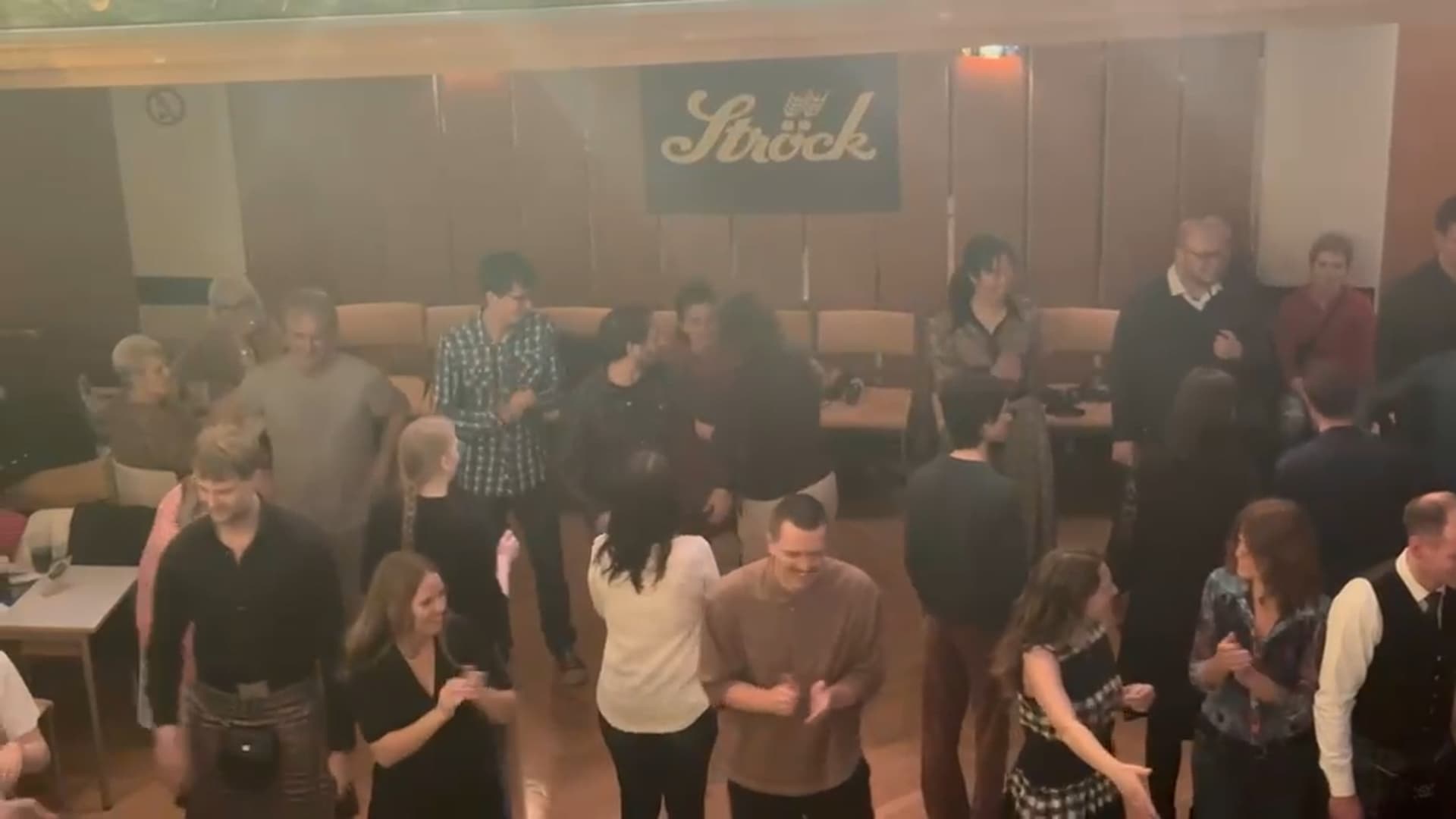
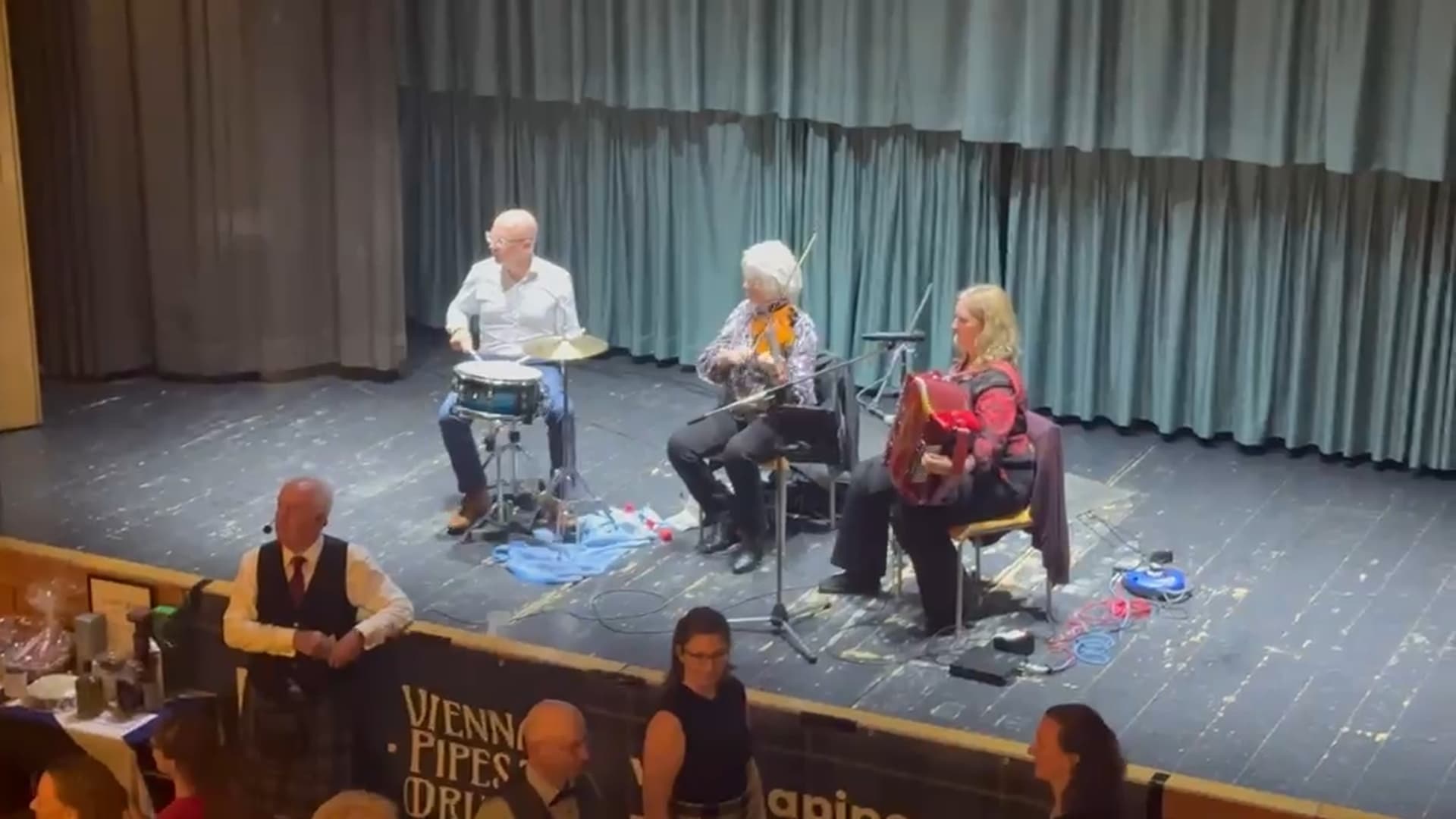
I went to a Scottish dance evening expecting the most boring night of my life. I left after midnight having made a complete fool of myself, drunk more Guinness than was strictly sensible, and discovered that sometimes the best things in life are the ones you would never dream of doing. _______________________ There is a man called Colin who has been helping to keep Scottish culture alive in Vienna for more than 40 years, and on Friday night I spent several hours trying to interview him. It wasn't easy. Colin seemed to be everywhere at once, explaining complicated dances to a hall full of people, talking about Scottish music, rugby, whisky and the importance of keeping traditions alive, and occasionally finding time to breathe. He appeared to have a microphone permanently attached to his face, which meant that a sizeable proportion of the evening's audience was treated to variations of his increasingly familiar promise to me: "I'll do the interview in a few minutes." By the time I finally staggered out after midnight, Colin was still rushing around, the hall was still buzzing, and I had achieved precisely nothing in the way of an interview. I had, however, consumed more Guinness than I normally drink in a year. I'm not much of a drinker, a fact which seemed to be completely lost on my hosts. One Guinness apparently wasn't an option. My glass remained mysteriously full throughout the evening, and whenever it threatened to become empty, another would materialise before I had the opportunity to protest. But I'm getting ahead of myself. The whole adventure began because I have two very good friends in Austria who frequently invite me to things when the kids decide that spending an evening with the adults is an unacceptable infringement of their human rights. I've been the grateful beneficiary of some excellent spare tickets over the years, including stand-up comedy evenings and other entertainment I might otherwise have missed. So when Louise sent me a WhatsApp message in the middle of a particularly frantic deadline asking whether I fancied joining them for an evening out, I replied immediately. "Yes." I didn't bother reading what I had agreed to, and it was only several hours later that I looked again. A St Andrew's Night Ceilidh. My heart sank. I imagined myself trapped in a Viennese concert hall, sitting politely through 90 minutes of bagpipes, followed perhaps by a few earnest speeches about Scottish history and a ceremonial glass of whisky. I briefly considered making my excuses, possibly inventing a sudden illness or an urgent appointment on another continent. Unfortunately, I had already said yes, and I don't like letting people down. So I decided to go, mentally filing the evening under experiences that build character. My previous knowledge of ceilidhs was fairly limited. As a teenager, I occasionally attended gatherings organised by a Scottish friend who owned a kilt. He would wear it, everyone else would bring whisky, Scottish music would be played, and sooner or later somebody would start singing Auld Lang Syne. Then we would all go home. This Friday night, however, was rather different. The event was the 40th St Andrew's Night Ceilidh, organised by Vienna Pipes and Drums at the Veranstaltungszentrum Döbling, a venue in Vienna's 19th district that, to someone unfamiliar with the area, seemed to be a considerable distance from civilisation. The building itself did little to dispel my gloomy expectations, yet once inside, I have to admit it was a different affair. There were kilts everywhere, worn by men and women, young and old. The hall was packed, the atmosphere was electric, and everybody seemed to know everybody else, or at least behaved as though they did. There were also far more young people than I had expected, including plenty in their twenties, who seemed to be enjoying themselves every bit as much as the older generations. The Vienna Pipes and Drums marched in, splendidly dressed and making enough noise to wake the dead across several districts. And I have to admit, they were magnificent. After a short performance, the pipers and drummers moved off the floor, a three-piece ceilidh band took over, and Colin announced that the audience was expected to dance. This was an unfortunate development. I had arrived with Louise, Ann and Wolfie, with the latter showing the finely honed survival instincts of a man who knew exactly what was coming, and had wisely already retreated to a position in the gallery as far from the dance floor as humanly possible. I looked up and saw him waving cheerfully down at me. By then, it was too late to escape, and I was reminded of the old journalist wisdom there was no such thing as a free Guinness, or, it seemed, a free ticket, as it always needed to be paid for somehow. I had been press-ganged, despite the disability of having two left feet, and I prepared to meet my fate. My partner for the dance was Ann, who I have always known to be considerably smarter than me, and who assured me she hadn't the faintest idea what she was doing. This turned out to be slightly untrue, as within seconds she was spinning around the floor as if she had spent her entire life doing Scottish country dancing, while I was still trying to establish which foot I was supposed to move first. It subsequently emerged that she was an annual attendee and knew perfectly well what she was doing. I, meanwhile, developed an alarming tendency to find myself facing a wall when everybody else was facing a partner, or arriving in the wrong line just as the music demanded that I should be somewhere completely different. The strange thing was that nobody seemed to mind. Everywhere I looked, people were laughing, correcting one another, grabbing the hands of complete strangers and generally having the time of their lives. Even those watching seemed to be enjoying the spectacle of people like me attempting to introduce entirely new and previously unknown variations to Scottish dance tradition. By the end, I felt I had acquitted myself reasonably well. Admittedly, this assessment was based entirely on the fact that I had remained upright and nobody had called an ambulance. I was even contemplating another dance. Then I noticed that everyone had already lined up for the next one. Wolfie was still safely ensconced somewhere near the ceiling, and Ann and Louise, apparently having decided not to wait for either of us to do the decent thing, were standing opposite one another ready to dance together. There was no shortage of women prepared to take the traditionally male position in the lines. There did, however, seem to be a shortage of women willing to take the position opposite me. I couldn't imagine why, but determined not to be left out, I spotted an older lady sitting alone nearby and asked whether she might like to dance. She was called Barbara. I'd assumed, rather foolishly, that an older lady might be looking for a gentle turn around the floor with someone whose chief ambition was to survive the evening without serious injury. Barbara leapt out of her chair with the speed of someone responding to an emergency call. Within moments she had dragged me to the end of a line, organised us into a foursome with another couple, and begun issuing instructions. She quickly established that I was completely hopeless. Then she looked at the other dancers and realised that together with my English friend Lousie in the line as well, things were even worse than she had feared. Clearly, drastic measures were required, and Barbara demanded several practice runs while Colin coached the rest of the hall. With the authority of a military commander and a grip that would have impressed a professional wrestler, she propelled me through the correct steps, spinning me left, right and occasionally in directions I hadn't realised were available to the human body. She had a booming voice, an encyclopaedic knowledge of the dance, and absolutely no tolerance for people wandering into the wrong line. Which was unfortunate for me. Whenever I went astray, she seized me, corrected my course and dispatched me back into formation. She somehow found time to do the same for everyone else. Before I quite understood what was happening, we had worked our way to the front of the line, where Barbara demonstrated the dance for the benefit of the rest of the hall. Apparently, once somebody at the front knows what they're doing, everyone else can follow. It was a theory that depended rather heavily on Barbara. And it worked. The music started, people began spinning, couples changed places, lines formed and re-formed, and somehow the whole thing came together. I even began to understand it. Just as I was starting to feel almost competent, the dance ended. Barbara received a thoroughly deserved round of applause for her heroic efforts at herding what must have felt like a particularly uncooperative flock of sheep. I thanked her and retired to the sidelines, convinced that two dances represented a perfectly respectable contribution to the evening. It was time for Wolfie to come down from his mountain refuge and do some of the work. I wandered back towards the stage, where Louise was sitting. "You did really well," she said. She managed to deliver this outrageous falsehood with an entirely straight face. I nodded modestly, as one does when accepting praise for an achievement of exceptional significance. "Ready for another dance?" she asked. Absolutely not, I told her. "That's a shame," she said. "Because this young lady is looking for a partner." And there, beside her, was a striking young blonde woman who looked remarkably like somebody I had been hopelessly infatuated with in my twenties. It was the sort of resemblance capable of making a man forget several decades of accumulated wisdom in an instant. She smiled and explained that she, too, wanted to dance. Well, what could I do? It would have been positively rude to refuse. So back onto the floor I went, determined to make a slightly better impression than I had during my previous encounters with Scottish choreography. Things immediately took a worrying turn. We lined up beside a musician I had met earlier and his girlfriend, who happened to be a professional dancer. That in itself is hardly unusual in Vienna, a city where opera houses, concert halls, theatres and musical talent seem to be available on every street corner. But then my partner began chatting to the other woman. "Oh, you're a professional dancer? What do you do?" "Salsa," came the reply. "And what do you do?" My partner explained that she was a professional dancer at the Volksoper. Wonderful. I had somehow managed to position myself between two professional dancers in a hall full of people who were already considerably better at dancing than I was. I began to suspect that the evening was about to end with my public humiliation on a scale not previously achieved. But something extraordinary happened. With a professional dancer in front of me demonstrating the steps and another opposite me who knew precisely where she was supposed to be, I discovered that I could actually do it. Every time I turned, my partner was there. She knew when to move, when to spin, when to change partners, and when to send me off to the next person in the line. All I had to do was follow. And suddenly, it clicked. We were moving down the lines, changing partners, turning, returning, weaving between the other dancers, and somehow arriving back in exactly the right place at exactly the right moment. The whole thing flowed like clockwork. I was dancing. Properly dancing. Or at least performing a sufficiently convincing imitation of dancing that nobody felt the need to intervene. It was exhilarating. There was something genuinely wonderful about being part of a whole room moving together, everybody depending on everybody else to get it right, and nobody caring too much when somebody got it wrong. For a few glorious minutes, I felt as if I actually knew what I was doing. I should make it absolutely clear that I claim no credit whatsoever. Put me alongside two professional dancers and, apparently, even I can look reasonably competent. It was rather like being pushed around a racetrack in a shopping trolley by two Formula One drivers and then claiming to have mastered motor racing. But I loved every minute of it. And I couldn't help thinking how easily I might have missed the whole experience. If I'd bothered to read Louise's WhatsApp message before accepting, I almost certainly wouldn't have gone. If Ann hadn't dragged me onto the floor, I'd probably have stayed safely on the sidelines. And without Barbara's determined efforts to turn me into something resembling a dancer, I might never have tried again. Instead, I'd had one of the most enjoyable evenings in ages, thanks largely to a room full of people who were happy to share something they loved with complete strangers. Perhaps there's a lesson in that. Sometimes you have to say yes to things you don't fancy, make a complete fool of yourself, and keep trying until something wonderful happens. I never did get my interview with Colin. But after 40 years of organising evenings like this, perhaps the fact that he was far too busy making sure everybody had a good time tells you everything you need to know. Perhaps next year. Although I rather suspect he'll still be busy. And this time, I'll be taking my dancing shoes.
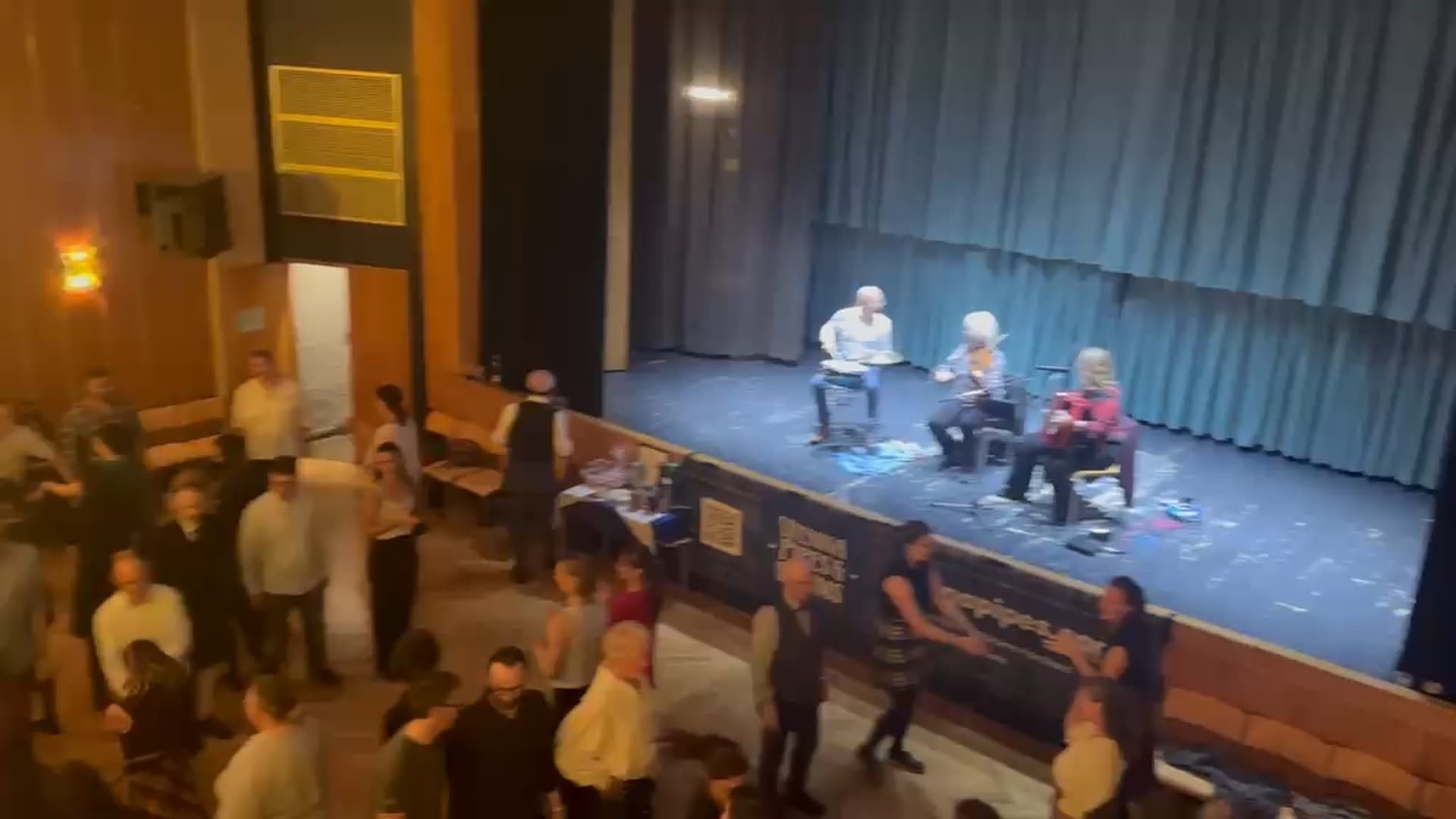
I went to a Scottish dance evening expecting the most boring night of my life. I left after midnight having made a complete fool of myself, drunk more Guinness than was strictly sensible, and discovered that sometimes the best things in life are the ones you would never dream of doing. _______________________ There is a man called Colin who has been helping to keep Scottish culture alive in Vienna for more than 40 years, and on Friday night I spent several hours trying to interview him. It wasn't easy. Colin seemed to be everywhere at once, explaining complicated dances to a hall full of people, talking about Scottish music, rugby, whisky and the importance of keeping traditions alive, and occasionally finding time to breathe. He appeared to have a microphone permanently attached to his face, which meant that a sizeable proportion of the evening's audience was treated to variations of his increasingly familiar promise to me: "I'll do the interview in a few minutes." By the time I finally staggered out after midnight, Colin was still rushing around, the hall was still buzzing, and I had achieved precisely nothing in the way of an interview. I had, however, consumed more Guinness than I normally drink in a year. I'm not much of a drinker, a fact which seemed to be completely lost on my hosts. One Guinness apparently wasn't an option. My glass remained mysteriously full throughout the evening, and whenever it threatened to become empty, another would materialise before I had the opportunity to protest. But I'm getting ahead of myself. The whole adventure began because I have two very good friends in Austria who frequently invite me to things when the kids decide that spending an evening with the adults is an unacceptable infringement of their human rights. I've been the grateful beneficiary of some excellent spare tickets over the years, including stand-up comedy evenings and other entertainment I might otherwise have missed. So when Louise sent me a WhatsApp message in the middle of a particularly frantic deadline asking whether I fancied joining them for an evening out, I replied immediately. "Yes." I didn't bother reading what I had agreed to, and it was only several hours later that I looked again. A St Andrew's Night Ceilidh. My heart sank. I imagined myself trapped in a Viennese concert hall, sitting politely through 90 minutes of bagpipes, followed perhaps by a few earnest speeches about Scottish history and a ceremonial glass of whisky. I briefly considered making my excuses, possibly inventing a sudden illness or an urgent appointment on another continent. Unfortunately, I had already said yes, and I don't like letting people down. So I decided to go, mentally filing the evening under experiences that build character. My previous knowledge of ceilidhs was fairly limited. As a teenager, I occasionally attended gatherings organised by a Scottish friend who owned a kilt. He would wear it, everyone else would bring whisky, Scottish music would be played, and sooner or later somebody would start singing Auld Lang Syne. Then we would all go home. This Friday night, however, was rather different. The event was the 40th St Andrew's Night Ceilidh, organised by Vienna Pipes and Drums at the Veranstaltungszentrum Döbling, a venue in Vienna's 19th district that, to someone unfamiliar with the area, seemed to be a considerable distance from civilisation. The building itself did little to dispel my gloomy expectations, yet once inside, I have to admit it was a different affair. There were kilts everywhere, worn by men and women, young and old. The hall was packed, the atmosphere was electric, and everybody seemed to know everybody else, or at least behaved as though they did. There were also far more young people than I had expected, including plenty in their twenties, who seemed to be enjoying themselves every bit as much as the older generations. The Vienna Pipes and Drums marched in, splendidly dressed and making enough noise to wake the dead across several districts. And I have to admit, they were magnificent. After a short performance, the pipers and drummers moved off the floor, a three-piece ceilidh band took over, and Colin announced that the audience was expected to dance. This was an unfortunate development. I had arrived with Louise, Ann and Wolfie, with the latter showing the finely honed survival instincts of a man who knew exactly what was coming, and had wisely already retreated to a position in the gallery as far from the dance floor as humanly possible. I looked up and saw him waving cheerfully down at me. By then, it was too late to escape, and I was reminded of the old journalist wisdom there was no such thing as a free Guinness, or, it seemed, a free ticket, as it always needed to be paid for somehow. I had been press-ganged, despite the disability of having two left feet, and I prepared to meet my fate. My partner for the dance was Ann, who I have always known to be considerably smarter than me, and who assured me she hadn't the faintest idea what she was doing. This turned out to be slightly untrue, as within seconds she was spinning around the floor as if she had spent her entire life doing Scottish country dancing, while I was still trying to establish which foot I was supposed to move first. It subsequently emerged that she was an annual attendee and knew perfectly well what she was doing. I, meanwhile, developed an alarming tendency to find myself facing a wall when everybody else was facing a partner, or arriving in the wrong line just as the music demanded that I should be somewhere completely different. The strange thing was that nobody seemed to mind. Everywhere I looked, people were laughing, correcting one another, grabbing the hands of complete strangers and generally having the time of their lives. Even those watching seemed to be enjoying the spectacle of people like me attempting to introduce entirely new and previously unknown variations to Scottish dance tradition. By the end, I felt I had acquitted myself reasonably well. Admittedly, this assessment was based entirely on the fact that I had remained upright and nobody had called an ambulance. I was even contemplating another dance. Then I noticed that everyone had already lined up for the next one. Wolfie was still safely ensconced somewhere near the ceiling, and Ann and Louise, apparently having decided not to wait for either of us to do the decent thing, were standing opposite one another ready to dance together. There was no shortage of women prepared to take the traditionally male position in the lines. There did, however, seem to be a shortage of women willing to take the position opposite me. I couldn't imagine why, but determined not to be left out, I spotted an older lady sitting alone nearby and asked whether she might like to dance. She was called Barbara. I'd assumed, rather foolishly, that an older lady might be looking for a gentle turn around the floor with someone whose chief ambition was to survive the evening without serious injury. Barbara leapt out of her chair with the speed of someone responding to an emergency call. Within moments she had dragged me to the end of a line, organised us into a foursome with another couple, and begun issuing instructions. She quickly established that I was completely hopeless. Then she looked at the other dancers and realised that together with my English friend Lousie in the line as well, things were even worse than she had feared. Clearly, drastic measures were required, and Barbara demanded several practice runs while Colin coached the rest of the hall. With the authority of a military commander and a grip that would have impressed a professional wrestler, she propelled me through the correct steps, spinning me left, right and occasionally in directions I hadn't realised were available to the human body. She had a booming voice, an encyclopaedic knowledge of the dance, and absolutely no tolerance for people wandering into the wrong line. Which was unfortunate for me. Whenever I went astray, she seized me, corrected my course and dispatched me back into formation. She somehow found time to do the same for everyone else. Before I quite understood what was happening, we had worked our way to the front of the line, where Barbara demonstrated the dance for the benefit of the rest of the hall. Apparently, once somebody at the front knows what they're doing, everyone else can follow. It was a theory that depended rather heavily on Barbara. And it worked. The music started, people began spinning, couples changed places, lines formed and re-formed, and somehow the whole thing came together. I even began to understand it. Just as I was starting to feel almost competent, the dance ended. Barbara received a thoroughly deserved round of applause for her heroic efforts at herding what must have felt like a particularly uncooperative flock of sheep. I thanked her and retired to the sidelines, convinced that two dances represented a perfectly respectable contribution to the evening. It was time for Wolfie to come down from his mountain refuge and do some of the work. I wandered back towards the stage, where Louise was sitting. "You did really well," she said. She managed to deliver this outrageous falsehood with an entirely straight face. I nodded modestly, as one does when accepting praise for an achievement of exceptional significance. "Ready for another dance?" she asked. Absolutely not, I told her. "That's a shame," she said. "Because this young lady is looking for a partner." And there, beside her, was a striking young blonde woman who looked remarkably like somebody I had been hopelessly infatuated with in my twenties. It was the sort of resemblance capable of making a man forget several decades of accumulated wisdom in an instant. She smiled and explained that she, too, wanted to dance. Well, what could I do? It would have been positively rude to refuse. So back onto the floor I went, determined to make a slightly better impression than I had during my previous encounters with Scottish choreography. Things immediately took a worrying turn. We lined up beside a musician I had met earlier and his girlfriend, who happened to be a professional dancer. That in itself is hardly unusual in Vienna, a city where opera houses, concert halls, theatres and musical talent seem to be available on every street corner. But then my partner began chatting to the other woman. "Oh, you're a professional dancer? What do you do?" "Salsa," came the reply. "And what do you do?" My partner explained that she was a professional dancer at the Volksoper. Wonderful. I had somehow managed to position myself between two professional dancers in a hall full of people who were already considerably better at dancing than I was. I began to suspect that the evening was about to end with my public humiliation on a scale not previously achieved. But something extraordinary happened. With a professional dancer in front of me demonstrating the steps and another opposite me who knew precisely where she was supposed to be, I discovered that I could actually do it. Every time I turned, my partner was there. She knew when to move, when to spin, when to change partners, and when to send me off to the next person in the line. All I had to do was follow. And suddenly, it clicked. We were moving down the lines, changing partners, turning, returning, weaving between the other dancers, and somehow arriving back in exactly the right place at exactly the right moment. The whole thing flowed like clockwork. I was dancing. Properly dancing. Or at least performing a sufficiently convincing imitation of dancing that nobody felt the need to intervene. It was exhilarating. There was something genuinely wonderful about being part of a whole room moving together, everybody depending on everybody else to get it right, and nobody caring too much when somebody got it wrong. For a few glorious minutes, I felt as if I actually knew what I was doing. I should make it absolutely clear that I claim no credit whatsoever. Put me alongside two professional dancers and, apparently, even I can look reasonably competent. It was rather like being pushed around a racetrack in a shopping trolley by two Formula One drivers and then claiming to have mastered motor racing. But I loved every minute of it. And I couldn't help thinking how easily I might have missed the whole experience. If I'd bothered to read Louise's WhatsApp message before accepting, I almost certainly wouldn't have gone. If Ann hadn't dragged me onto the floor, I'd probably have stayed safely on the sidelines. And without Barbara's determined efforts to turn me into something resembling a dancer, I might never have tried again. Instead, I'd had one of the most enjoyable evenings in ages, thanks largely to a room full of people who were happy to share something they loved with complete strangers. Perhaps there's a lesson in that. Sometimes you have to say yes to things you don't fancy, make a complete fool of yourself, and keep trying until something wonderful happens. I never did get my interview with Colin. But after 40 years of organising evenings like this, perhaps the fact that he was far too busy making sure everybody had a good time tells you everything you need to know. Perhaps next year. Although I rather suspect he'll still be busy. And this time, I'll be taking my dancing shoes.
Video
Photos
Editorial team
- MJ Leidigjournalist
- Mike Leidigsenior writer · news editor · copychecker · editor · spotter · picture editor
- [email protected]illustrator · video editor